
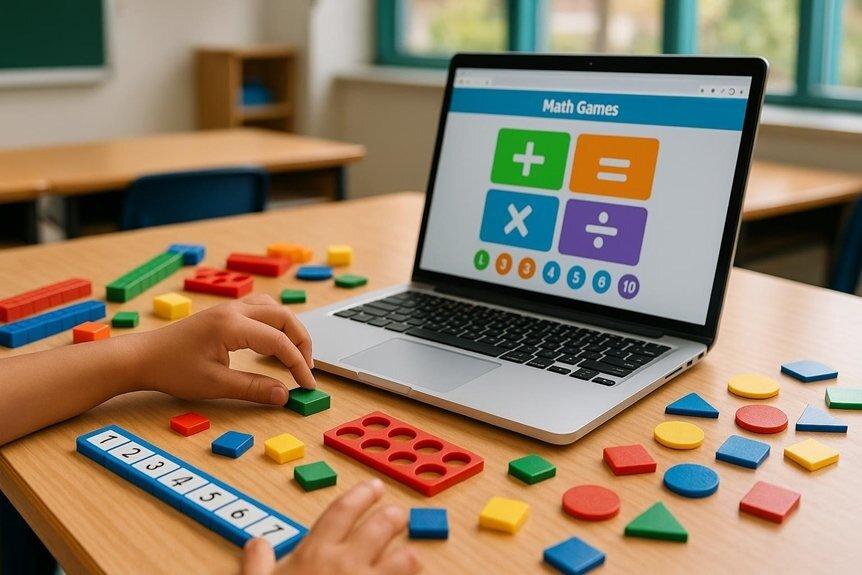
Balancing physical math manipulatives with online platforms is all about integration. Start with hands-on activities to spark understanding, then reinforce those concepts through interactive digital exercises. Use engaging online games that align with your lessons, allowing students to explore math in varied ways. Document their journey by encouraging collaborative work using both formats. This blend not only enhances understanding but also fosters curiosity. Discover how to create effective lesson plans that maximize both tools as you explore further.
Why Using Physical Math Tools Is a Game Changer
When you incorporate physical math tools into your learning process, you gain access to a new level of engagement and understanding that online portals alone often can’t provide.
These tactile learning experiences make concepts come alive, transforming abstract ideas into something you can touch and manipulate. As you work with physical manipulatives, your brain actively connects these tools with the math you’re learning, enhancing retention and comprehension.
This hands-on approach fosters student engagement by making lessons interactive and enjoyable. You’ll find yourself more curious and enthusiastic to explore complex topics.
Plus, the freedom to experiment and discover solutions at your own pace can ignite a passion for math that online methods sometimes overlook. Embrace the power of physical tools!
Leading Online Learning Platforms for Math Manipulatives
While physical manipulatives offer a hands-on approach to learning math, online platforms have emerged as powerful tools that complement this experience.
These digital resources provide engaging virtual manipulatives and interactive simulations that make math concepts accessible and enjoyable. Here are some top online learning platforms you should explore:
- Mathigon: Offers a dynamic curriculum with interactive tools.
- Toy Theater: Features a variety of virtual manipulatives for all ages.
- Brainingcamp: Provides interactive simulations that clarify complex math topics.
- Didax: Offers a selection of digital manipulatives that enhance understanding.
Creating a Hybrid Lesson Plan for Math Instruction
To create an effective hybrid lesson plan for math instruction, you’ll want to seamlessly integrate both physical manipulatives and online resources. Start with clear objectives that align with your curriculum, ensuring they cover essential math concepts in the best online elementary school environment.
In your lesson design, introduce hands-on activities using manipulatives to engage students and foster a deeper understanding. Then, shift to online platforms that reinforce these concepts through interactive exercises. This approach encourages hybrid teaching by allowing students to explore math in varied ways.
Be sure to incorporate assessments that reflect both physical and digital learning experiences. By balancing these elements, you empower students to take charge of their learning journey, making math instruction both enjoyable and effective.
Effective Strategies for Blending Physical and Digital Tools
As you look to blend physical and digital tools in your math instruction, consider the unique strengths each brings to the table. Combining these resources can enhance student engagement and create dynamic, interactive activities.
Here are some effective strategies to help you:
- Use physical manipulatives to introduce concepts, then shift to digital tools for practice.
- Incorporate online games that reinforce lessons taught with hands-on materials.
- Facilitate group work where students use both types of tools to solve problems collaboratively.
- Encourage students to document their learning journey through both physical and digital formats, fostering a deeper understanding.
Measuring Student Success in a Blended Learning Environment
Blending physical manipulatives with online tools opens up new ways to assess student success in math. You can enhance student engagement by using diverse assessment methods that capture a fuller picture of each learner’s understanding.
Consider combining traditional quizzes with interactive online platforms, allowing students to demonstrate their skills in various formats. Incorporate formative assessments, like exit tickets or quick polls, to gauge real-time comprehension.
You’ll empower students to take ownership of their learning by providing opportunities for self-assessment and peer feedback. By integrating these approaches, you’ll not only track progress effectively but also create a dynamic learning environment where students feel free to explore and express their mathematical abilities.
Embrace this blended approach, and watch your students thrive!
Conclusion
By blending physical math manipulatives with online portals, you’re not just keeping up with educational trends; you’re transforming your classroom into an engaging learning hub. Imagine your students thriving as they seamlessly switch between tactile tools and interactive digital experiences. When you combine these two worlds, you reveal new ways for them to connect with math concepts. So, embrace this hybrid approach, and watch as your students’ understanding and enthusiasm for math soar to new heights!