
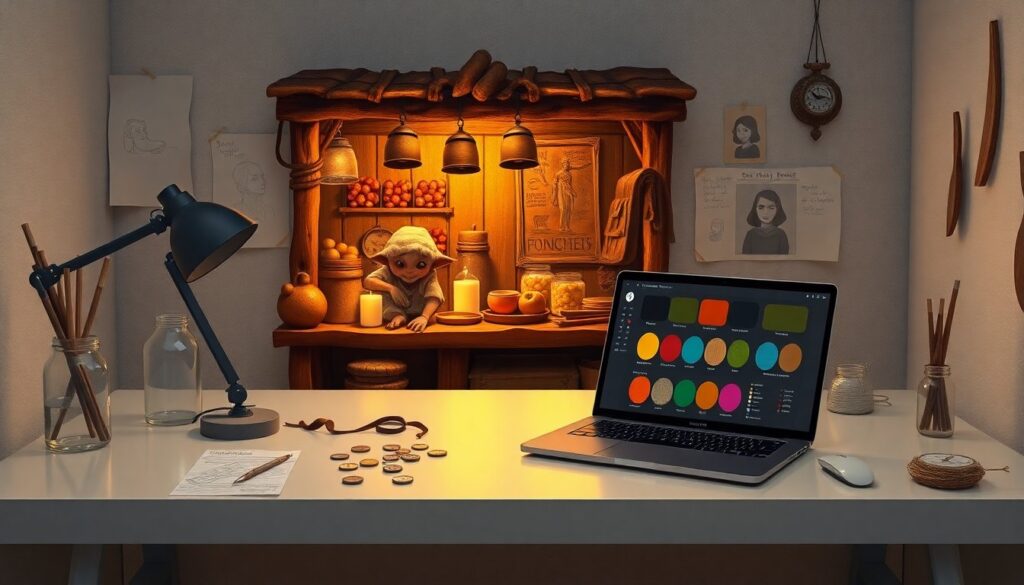
TheFairyPixelDiqG inspires many artists with goblin market art inspiration. The article shows clear themes and simple prompts. It sets mood, character cues, and color choices. It gives direct, usable tips for artists who want to craft market scenes. The text stays practical and compact. The reader will gain ready ideas to start a visual series.
Key Takeaways
- TheFairyPixelDiqG’s goblin market art inspiration emphasizes clear themes like trade and danger, using symbols and narrative hooks to set mood and emotion.
- Repeating motifs such as ravens and ribbons create a cohesive visual language that connects images into a larger story.
- Character and creature designs reflect practical oddities and clear role cues, enhancing storytelling through distinct traits and silhouettes.
- Artists apply specific color palettes and lighting strategies to evoke atmosphere, directing focus and adding depth to market scenes.
- Texture details and careful editing enrich the tactile feel of goods, making each item convey history and value.
- Digital techniques, including brush choice and layered editing, support efficient creation and experimental prompt-based studies for varied but cohesive artwork.
Capture The Mood: Themes, Symbols, And Narrative Hooks
Artists find goblin market art inspiration in trade, desire, and danger. They focus on barter scenes, forbidden fruit, and gleaming trinkets. Symbols such as jars, locks, and broken mirrors suggest loss and promise. A single hook drives a scene: a child trades a shoe, a merchant hides a grin, a crowd leans toward a glowing stall. Each hook sets a clear emotional aim.
They choose motifs that repeat across pieces. Repeated motifs build a visual language. For example, ravens appear as messengers, ribbons mark spells, and coins stain fingers. They use motifs to connect separate images into a series. Each image then feels like part of a larger story.
Writers and artists pair short captions with images. Captions add context and deepen intrigue. Simple captions such as “She pays with a promise” or “The glass apple keeps secrets” give viewers a narrative anchor. Captions keep the market alive between scenes.
Artists use goblin market art inspiration to explore contrast. They place bright goods against dark alleys. They show lush textures next to rough hands. Contrast draws attention and creates tension. Artists then guide the eye through the frame.
Character And Creature Design Inspired By Goblin Market
Designers make characters that feel useful and strange. They give merchants odd limbs, mismatched teeth, and small, useful tools. They give buyers worn clothing, eager eyes, and small scars. Each detail reveals a habit, a loss, or a trade.
Creators name a trait, then repeat it with variation. One goblin may collect bells, another may collect wristbands. Repeating a trait creates identity and keeps designs cohesive across a portfolio. They keep silhouettes readable at small sizes. A strong silhouette helps the viewer recognize a character on first glance.
They design creatures with practical oddities. A rodent might carry seeds in cheek pouches. A winged creature might wear pouches on its legs. These details hint at behavior and economy. They imply how a creature moves, eats, and trades.
Artists use goblin market art inspiration to set roles. They mark sellers with aprons and worn pockets. They mark customers with small bundles and hopeful hands. They mark thieves with empty sleeves and quick steps. These role cues tell the viewer who does what in the scene.
Color, Light, And Texture — Practical Styling Tips
Artists select color palettes that suggest mood. Warm golds and sickly greens make goods look alluring and unsafe. Cool blues and dull grays make alleys feel empty and cold. They limit the palette to three main tones and one accent to keep focus.
Light becomes a character in market scenes. Artists place a strong light over a stall to draw the eye. They use soft backlight to silhouette figures and to add depth. They add small light sources like candles, lanterns, and glowing fruit to create pockets of interest. Light directs the viewer and defines the form.
Texture gives goods a tactile presence. Artists use scuffs, stains, and thread details to make items feel used. They show paper labels, frayed cloth, and chipped pottery. These small marks tell a history about each object. The viewer then reads value through wear.
They apply goblin market art inspiration when they edit. They sharpen focal details and blur the edges. They raise contrast near key objects and mute background tones. This editing mimics how the eye focuses in a busy crowd.
Digital Brushes, Layering Tricks, And Prompt Examples
They choose brushes that match material. A linen brush suggests fabric. A grainy brush suggests old paper. A soft airbrush suggests glow. They use layer modes to mix light and color without repainting.
They build layers in logical order. Base color layers sit beneath shadow and light layers. Texture layers sit above base color but below major highlights. Adjustment layers tune hue and contrast. This order keeps files flexible and efficient.
They test simple prompts for quick concept studies. Example prompt: “market stall at dusk, glowing fruit, crowded hands, muted alley, warm gold and sickly green palette, painterly texture, high contrast focal light.” Another prompt: “small goblin merchant, mismatched teeth, bell collection, leaning over jars, candlelit face, rough cloth texture.” These prompts produce focused thumbnails.
They refine prompts to push variety. They swap one motif per run: change fruit to mirrors, bell to wristband, or candle to lantern. Small swaps give many distinct results while keeping cohesion.
They use goblin market art inspiration to keep experiments purposeful. They test color, light, and props with short runs. They save the best iterations as references for full pieces.