
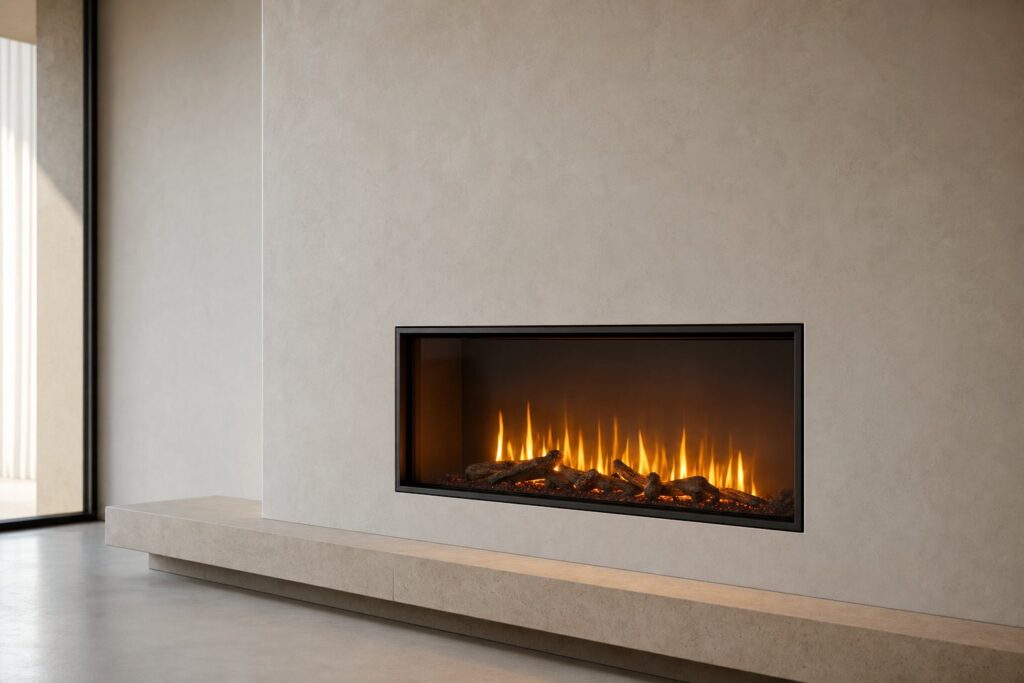
Minimalist interiors emphasise clarity, calm, and purposeful design, while also benefitting from warmth and atmosphere. Integrating a fireplace into these pared-back spaces brings a distinct challenge, introducing a cosy focal point without adding visual clutter.
Within minimalist schemes, the electric fireplace insert is increasingly chosen for its ability to deliver ambience without disrupting clean lines or simplicity. Fireplaces often act as visual anchors, drawing the eye and giving even the simplest room a sense of welcome. Yet, in spaces where excess detail is removed, every new element must be justified. Thoughtful integration of this feature can help maintain a tranquil aesthetic while introducing both literal and visual warmth.
Focusing on spatial balance and quiet focal points
The principle of a “quiet focal point” is essential in minimalist rooms where restraint takes priority. This approach values subtle visual guidance over prominence, making the fireplace a gentle but constant feature that does not overpower the sense of open space.
Careful placement is fundamental. Positioning the fireplace within a balanced wall or central sightline upholds symmetry and preserves negative space. Consider how the insert aligns with windows, furniture, or artwork, ensuring uninterrupted flow and coherence throughout the scheme.
Managing scale, alignment, and architectural harmony
Proportion significantly affects how well a fireplace harmonises with other elements. Sizing should correspond to both the room’s dimensions and its major furnishings, an especially important strategy in minimalist layouts where imbalance quickly becomes noticeable.
Integration also depends on how the fireplace aligns with architectural features. Maintaining consistent relationships with elements like window heads, shelving lines, and built-in seating helps anchor the insert visually and spatially. In contemporary interiors, electric fireplace inserts are valued for their slim profiles and flexible sizing, supporting precise architectural alignment across different layouts.
Material selection and subtle detailing for cohesiveness
Material choices are critical for ensuring the new feature blends into calm, uncluttered surroundings. Finishes such as smooth plaster, matte stone, microcement, and softly grained wood create a quiet backdrop that suits minimalism and reduces visual noise.
Attention to detail distinguishes successful minimalist installations, and precise edge treatments make a difference. Incorporating flush edges, shadow gaps, or slim reveal details keeps the transition between the fireplace and the surrounding surfaces crisp and deliberate. Careful management of vents, power cables, and controls is equally important, as visible mechanical elements can interrupt the intended seamless look. Electric fireplace insert options often include solutions for concealed wiring and minimal venting, which can support a seamless visual presentation.
Enhancing atmosphere through controlled lighting strategies
Minimalism does not preclude atmosphere, and lighting choices play a decisive role in shaping mood. Pairing the gentle glow of an electric fireplace with soft, low-glare surface or cove lighting enhances warmth without overwhelming the room’s serenity.
Indirect light sources such as wall washes or floor-level uplighting can soften shadows and draw attention to refined textures and silhouettes. Together, these techniques lend the space a sophisticated evening ambience, supporting the calming effect central to minimalist design.
Styling principles and digital design refinement
Accessory choices require restraint. A minimalist fireplace surround benefits from repeated shapes, a limited number of decorative objects, and tonal harmonies that echo the room’s underlying palette. In some instances, omitting decor altogether allows natural textures or simple geometry to become the centrepiece, reflecting minimalist intentions.
Digital tools assist with decisions before physical installation. Basic 3D models, simple room mockups, or physical mood boards allow for previewing fireplace placement, testing scale, and evaluating finishes clearly. Using a structured checklist, such as reviewing visual weight, line continuity, and negative space, can help confirm the space remains appropriately minimal after incorporating a fireplace.
The key principles guiding minimalist fireplace integration are clarity of geometry, a disciplined material palette, and assured negative space. A well-designed electric fireplace insert can help strengthen a room’s inviting atmosphere while preserving the serene simplicity valued in contemporary minimalism.